


One of the most frequent questions I have been asked is how I use Unique in my classroom and how I plan! I have to admit, I am an avid fan of Unique Learning System, however, I do not use ALL components of the unit. I have been using ULS for about 5 years now, enough to have figured out which pieces of the unit fit best with my students. One of the good things about Unique is that they provide you with an abundance of materials. I have not met one teacher yet that is able to use ALL of the plans from the unit (and if you are one of those teachers more power to ya!). For me, the key is to find what works best for your students!
Monthly Mapping
The first thing I do is grab a monthly calendar and my blank planning template (I will post the link to this free resource below). I mark all the days that we will be off and out of school. Once I have those days crossed off I start my planning. I print the first page from the unit that lists all the lessons. I plan when I will give my pre-assessment and then when I want my students to have their post assessment. If you do not use the Unique GPS, I highly recommend it! You can see student weak areas, what they need to focus on and you can see their growth over the month. I love it! Next, I choose the activities that I feel best introduce the topics to my students and highlight them. After I have all the activities chosen, I add them into my calendar.


Selecting the Activities
I have used Unique long enough to discover what works best for me and my students. It has changed yearly. This year, I used the following activities consistently every month:
Supplemental Activities I use:
- Leveled Book (Lesson 1) and corresponding activity
- Leveled Book Comprehension (Lesson 2)
- Easy Read Book (Lesson 3) and corresponding activity
- Easy Read Book Comprehension (Lesson 4)
- Vocabulary (Lesson 12)
- Literary Experience (Lessons 15 and 16)
- Vocabulary Sort (Lesson 18)
- Science Experiment (Lesson 28)
- History Timeline (Lesson 29)
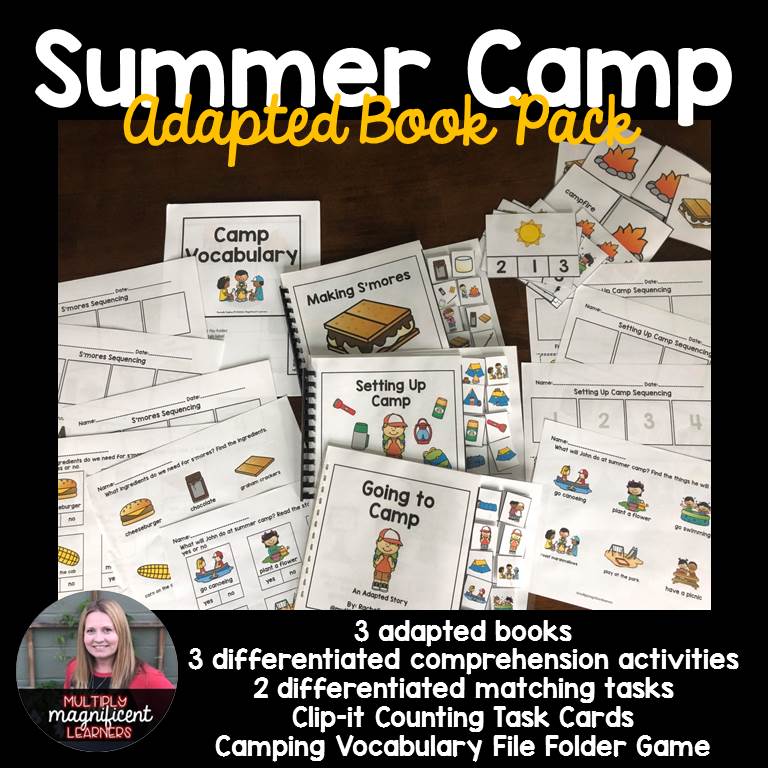
- Adapted Book Packs (samples of the packs in the picks below!) I created these book packs to help me supplement the curriculum because I needed more books! I started creating differentiated activities to go along with the books. Each adapted book set comes with at least 3 adpated books each book with 3 differentiated corresponding comprehension activities. 1 file folder game to cover vocabulary, 2 differentiated levels of vocabulary task boxes, and 1 counting card activity directly related to the monthly theme. Some packs include bonus materials!
- Science Adapted Book Packs
- I currently have 11 science themed activities listed and 5 science themed adapted book packs available. You can find the link to them above. I also have them available in a BUNDLE.


- Social Studies Adapted Book Packs
- I currently have 6 adapted book packs available. I also have these bundled for convenience. You can find the bundle here.
- Craft Activities related to topic
- Extension Activities from higher level unit
- N2Y activities

Planning the Lessons
I don't have a ton of time in my classroom to teach science and social studies content. On top of all the IEP work, speech, occupational therapy, physical therapy, specials, and getting them out to gen ed, I needed to integrate my lessons. So, my planning had to be simplified and integrated. During my small group/morning meeting I decided that when I was reading books, they needed to be adapted and content related. So my first step in my planning is mapping out my literacy activities. You can see those in the picture below color-coded in purple.
After I have those planned, I go back and plan on my specific content related activities, which are usually only 15 minutes long. Those are in the picture below color-coded in green.
The best part about planning this way, is once I have one month planned, I can pretty much easily plug in the rest of the year's lesson plans! I just re-use the same format and timeline from the first month. Some adjustments might need to be made based on days off, special activities, but for the most part, it's quick and easy to plug in my plans for the month!

Ideas for Lessons
Vocabulary
I always like to introduce the topics from the unit by introducing the new vocabulary. Some things that I have done in the past to make these activities fun and engaging:
- Mystery Box- add items to a box and have the students feel items and take guesses on what the new unit is going to be about. Example: for the light and sound unit I put a light bulb and a tamborine in the box and had students feel and guess what the items were.
- Play Hide and Seek- Hide new vocabulary words around the room and have students find them. When they find a vocabulary word have them read it to you.
- Mystery Word- Put vocabulary words in a brown paper bag and have students choose a word from the bag and tell class and hang up the word
- Put students in charge of changing the words- Our words are hanging on the wall next to our white board, I like to lay all the vocab words on the table and ask the student to find ______ and hang it on the wall.
After I have introduced the vocabulary we play the corresponding match game the next day.
I like to incorporate the leveled books during my literacy lessons. Typically, I will introduce the first book, and have students find the vocabulary words and highlight them.
For my lower level students, the adapted book packs I use incorporate the vocabulary making it quick and easy for you to assess using the books. I typically read the book and have my students make selections from the icons from a field of 2 or 3 depending on the student. I make sure to emphasize the unit vocabulary words during the story and direct instruction.
We do the vocabulary sort around three weeks into instruction so that I know the students have a had good quality time to absorb the content. I usually use this as an assessment, and students complete either individually or with some physical assistance. For my higher level students they complete independently and have very little accommodations. For my lower level students they complete with some assistance (for physical needs) but I color code their sorts to make it more independent for them.

For my lower level students, the adapted book packs I use incorporate the vocabulary making it quick and easy for you to assess using the books. I typically read the book and have my students make selections from the icons from a field of 2 or 3 depending on the student. I make sure to emphasize the unit vocabulary words during the story and direct instruction.
We do the vocabulary sort around three weeks into instruction so that I know the students have a had good quality time to absorb the content. I usually use this as an assessment, and students complete either individually or with some physical assistance. For my higher level students they complete independently and have very little accommodations. For my lower level students they complete with some assistance (for physical needs) but I color code their sorts to make it more independent for them.

Color-Coded Vocabulary Sort (Not from Unique, but strategy I use for differentiation)
Adapted Books/Literacy
I use both of the leveled books provided in the unit. I adapt them so they are interactive and the students can use icons to engage in the story. If the book warrants, I will use props to keep the kids excited about the story. I use these books to cover content, otherwise I would not have time! My typical routine for literacy is:
- Introduce the book
- Read and emphasize vocabulary
- Have students match icons to story from a field of 2 or 3
- Complete literacy activity and discuss vocabulary
- Re-read book focusing on content
- Comprehension assessment
I repeat these steps for the five books that I use during the unit. I created my adapted book packs so that I would always have a content related book to read and an activity to correlate! It makes my literacy planning so much easier!
I love using the literary experience. I use these monthly but pick and choose upon availability of the books that correspond with that lesson.

Adapted Books for "Plants Can Grow" Unit

Props for acting out story "Bunny in the Garden"
Science Experiment
I love doing the science experiments with the kids! I love getting them excited about them! I typically do my science experiment the third week of instruction however in this example (May) I needed to do it sooner due to the nature of the experiment (keeping plants healthy). I break my experiments down into smaller sections to increase engagement. Here is my typical routine for science experiments:
- Day 1- Introduce experiment- show items used in experiment, pass out experiment packet, look through experiment and discuss our steps.
- Day 2- Re-read experiment, discuss and make hypothesis, "check off" materials to make sure we are ready to go!
- Day 3- Conduct Experiment - following steps of experiment
- Day 4- Review our experiment, complete conclusion
I try to do experiments on Thursdays because we have extra time on this day because we have no specials!
One fun way I like to get them excited is to purposely leave materials for the experiment out around the classroom. When they find them, I say, "I guess you'll have to wait and see for experiment day!"

Science Experiment "Keeping Plants Healthy"
Crafts
I like to do crafts related to the topics of our units. I usually just pinterest or try to think of my own. Also, if you have access to the intermediate level of the unit, they have crafts as part of their lessons! I usually pull from that unit as well.

Craft for "Our Impact on the Environment" Unit

Craft for "Plants Can Grow" Unit
How do you plan your units? I would love to hear new tips and tricks! Drop a comment below if you have any suggestions for me! Follow my classroom journey on instagram for more ideas, tips, and fun!


